Blog

Uncategorized

An analysis of 2 primary concerns with allowing Twilio text 911 sms relay from Gotenna devices:

An analysis of 2 primary concerns with allowing Twilio text 911 sms relay from Gotenna devices:

(I) it may not work; and,

(II) it may result in abuse.

I. To address the first concern (efficacy):

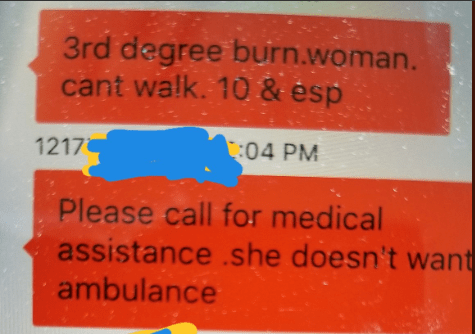
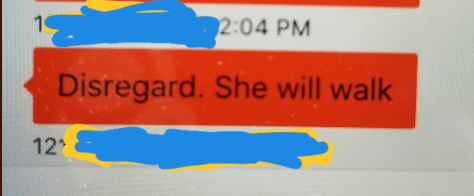
It does work, below is a Gotenna Twilio SMS relay to Text 911 prearranged with Puerto Rico 911 PSAP center:

Note, Gotenna’s app does not allow for the entry of only 3 digit phone numbers and it requires a leading country code (1). The way we were able to make this work was to input the 1, then pad the phone number entry field with zeros. (e.g. 1–000–000–0911 == 911)

In life, there are things, that may not work… however, these things can give us a fighting chance. The ONLY guarantee is that they will NOT work, 100% guaranteed, if, like Gotenna and Twilio, we don’t even try or we shy away from the challenge by forbidding any attempt with restrictive acceptable use policies.

This is a difficult technology and, at present, the implementation of text 911 is far from perfect, except in Puerto Rico where it is 100% implemented for almost 8 years now.

Gotenna offers some unique features that increase the likelihood of text 911 sms relay working. Gotenna has 1–2 miles of range per hop (even 62 miles range with elevation). Often times a user may not, themselves, be within range of a working cell tower, but a couple of miles away, another Gotenna relay may well be within range of a tower or a wifi signal. Gotenna users generally set up a permanently powered relay near their house with access to wifi.

Gotenna offers up to six hops (i.e. 6 hops x 2 miles = 12 miles or 6 hops x 10 miles = 60 miles) if any of these users within an e.g. 12–60 mile range do have signal then the message could be sms relayed via that working tower to text 911. Often times a CDMA (e.g. Sprint/Verizon) tower may be down, but a GSM tower (e.g. ATT/Tmobile/Claro) may be operational (this allows Gotenna users to spread the load out to other towers they may not ordinarily have access to) and multiplies the likelihood of getting a message out.

While voice calls can easily overwhelm the towers and the 911 PSAPS, short text messages (tagged with GPS) reduce the need for such voice calls- easing the burden on the PSAP and the towers.

So Gotenna in concert with Twilio multiplies the likelihood of effective delivery of emergency messages by:

(1) being vendor agnostic, working on ANY available tower or wifi (i.e. CDMA/GSM/Wifi);

(2) by spreading the message out geographically by e.g. tens of miles beyond the disaster situs (very helpful for localized disturbances);

(3) by reducing the need for voice calls which frees up cell tower and PSAP resources;

(4) by including a GPS position — so even if the user can’t report or is lost, 911 services can locate the survivor.

Further, Gotenna performs an initialization at each and every use based on GPS location to intelligently configure the device based on the local jurisdiction and operational laws. The FCC makes the text 911 data available in one centralized and publicly accessible psap database. It would be trivial to programmatically configure the Gotenna to try 911 sms relay or not based on this GPS location or determined operability of text 911 in the jurisdiction.

Or, we just try… if it doesn’t work, at least we tried… and a 50/50 chance is better than a hard-coded 0% chance. As time goes on, more and more PSAPs will be text 911 ready. With sufficient click-wrap license, with conspicuous warnings, we can let the user know that this might not work — but at least give them a fighting chance.

There are many places that this will work. For example, Puerto Rico- millions of people in Puerto Rico, locals, servicemembers, and first responders… ALL 78 municipalities of Puerto Rico have 100% operational text 911 service and have had it for almost a decade. Large areas of California, Nevada, Connecticut, Texas, New Hampshire, Vermont, Indiana, all have operational text 911 service. 80% of Florida will have operable 911 text service by January 1. Thousands more locations have working text 911. Many disaster-prone areas could use this technology to save lives.

We cannot deny them that fighting chance just because it’s difficult and may not work. Could we try a pilot program JUST for Puerto Rico? We are open to ANY compromise. There are millions of American lives there and hundreds of Gotenna devices already there.

II. To address the second concern (abuse):

In stark contrast to Gotenna (as outlined below), any kid can buy a burner phone for $19 at walmart or a gas station with untraceable cash or find/steal/trade a phone anywhere.

The phone doesn’t even need a subscription to service to work for swatting. As you know, 911 calls and texts must be allowed even if there’s no sim card or preexisting service. Even if the device does have a sim card, many prepaid options exist and allow pseudonymous registration. So anyone, anywhere, with a few bucks, with 100% anonymity can already abusively call or text 911. This doesn’t even address the online services accessible with TOR or other means. Any argument that allowing Gotenna to sms relay to 911 must be forbidden because of potential abuse is specious considering the relative ease of employing a burner phone or online service.

However, with Gotenna, there are trivial steps that we (or gotenna or PSAPS) could use to mitigate this risk and several unique features that inherently limit the attractiveness of abuse on this platform:

1) GotennaPlus sms relay requires purchase of $130 worth of Gotenna devices with a credit card, a name, a mailing address, and a billing address and a $9 yearly subscription where the serial number is tied to the subscriber- why spend $139 when you can steal any phone or buy one for $19?

2) Registering GoTenna plus requires a working phone number (verified with Twilio and Gotenna);

3) Gotenna’s routing protocol maintains GPS location of the originating node (AND every relay node- establishing a breadcrumb trail with up to six GPS locations) this allows for simple verification, fuzzy logic forensic location/fraud detection. This can be easily provided to the PSAP center or LEO’s in some simplified form and maintained to go after abusers or to proactively prevent abuse. In this sense, it makes Gotenna much less attractive for abuse.

4) Gotenna locations can be triangulated (in addition to the GPS trail).

5) Gotenna terms explicitly state that they can revoke access if there is abuse.

So, even though there is (1) a *significantly reduced* likelihood of abuse relative to other services, and (2) even though it guaranteed WILL work in several disaster areas like Puerto Rico, we guarantee that NO ONE can call for help because someone, somewhere, may abuse it or it might not work?

Either of these propositions by Gotenna / Twilio:

(1) We cannot try to help people because it might not work; or,

(2) We cannot try to help people because someone (however unlikely) might abuse it…

violate both the zeroth and first law (…allowing humanity to come to harm through inaction).

Bad storms, hurricanes, earthquakes, tornadoes, tsunamis are coming with increasing frequency and ferocity — to do nothing is to go silently into the night.

This Gotenna device is the only device that works for people like my mother when the tower falls- it increases the likelihood of her survival exponentially. This device is what we outfitted five teams of first responders with in Puerto Rico for search and rescue and convoy missions. It works. Twilio’s SMS relay will save lives and help us save more lives.

I was over there in Mountain View, Los Altos in ’89 when the earthquake came and we lost everything. Imagine the survival advantage you give us for next time if we can use ANY remaining cell tower or wifi (not just Sprint or ATT). Meta-signal diversity. This is huge.

I’m humbly and respectfully begging, could we please have a variance, a waiver of the Twilio Acceptable Use Policy to try a pilot program sandboxed JUST for Puerto Rico or just bay area? We are open to ANY compromise. There are millions of American lives there and hundreds of Gotenna devices already there.

Let’s be heroes. Let’s lead by example. Let’s tear down walls. Let’s make the effort to do this, not because it’s easy, but because it’s hard and we don’t shy away from a challenge or saving lives when it’s possible.

http://Fully-Enabled.com/blog

Uncategorized

When Twilio’s “acceptable use policy” Trumps Human Life

burn

A woman at Burning Man out in the middle of the Black Rock Desert was seriously injured with third degree burns and was unable to call for help by any other means.  There being almost no cell service, and her location at the far periphery into the desert, a good Samaritan called for help using the Gotenna Mesh network which allows text and gps messages even when there are no cell towers.

A really killer feature of Gotenna Mesh is that a message like this can be sent and it will hop from Gotenna device to Gotenna device in mesh fashion or p2p up to six times. The distance of each hop depends on a number of factors, but is generally about a mile or two (or up to 62 miles with elevation).  For example, the woman who was calling for help was at 10:00 and Esplanade or E (the user was confused as to location) fortunately, Gotenna includes an actual GPS location as metadata within the message.

where was she

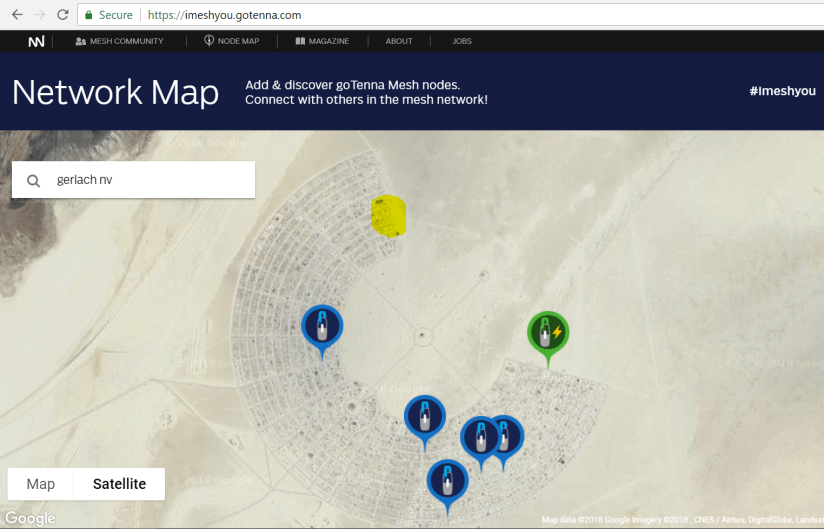
While she may have been out of range for some of the Gotenna Device meshes, I had placed a permanent relay Gotenna device node on the highest mountain overlooking the playa with full solar power to keep it going all week.  So when the message went out, I received it – as did others because of this relay.

However, no one knew where she was. The address she had given (10:00 and Esplanade) was wrong.  Signs had been stolen, jokes had been played on signs all week, and many of the signs were changed to “Larry” or “L” or “Larry4Ever” to show respect and love to the founder who had passed.  So her position was unclear.  Each Gotenna message stores the GPS location of the original sender, and the GPS location of each relay point, as metadata (not visible to other users) but with a breadcrumb trail of all six relays, the resolvable ultimate position would be invaluable to first responders.

There is another killer feature of Gotenna that makes it essential in all first responder’s or those who live in danger’s go-bags. GotennaPlus SMS relay. It’s $9 a year or FREE for up to 30 days each time you install the Gotenna app.  What it does is – if your intended recipient isn’t available by Gotenna, but any one of the six intermediate relays has cellular data or wifi or satellite or ANY kind of signal, the message is backhauled or forwarded out to the internet and then through Gotenna or Twilio’s servers, to the recipient as a text message.  Gotenna and Twilio presumably maintain records of the message AND THE METADATA including at least one GPS location.

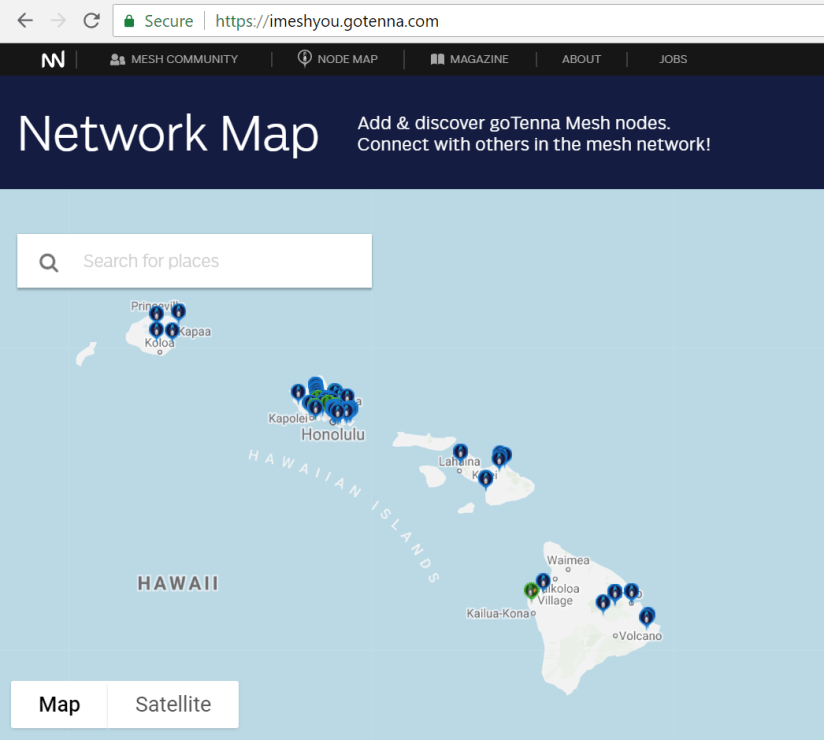
Before the event, I had contacted Burning Man Emergency Services, Washoe County Sheriff, and Pershing County Sheriff along with their 911 PSAP centers to confirm that they do, indeed have TEXT 911 operational and to give them a heads-up about this device and the perhaps odd 911 texts they may receive.  They confirmed that there is, indeed, operational text 911 service. What this means is that if you have an emergency and you cannot use voice to dial 911… maybe because the tower is too far, or too saturated with other voice calls, or you are hearing impaired… or any of a million reasons why you may not be able to use traditional voice 911, Washoe County (host of Burning Man) is 100% set up to receive emergency messages via text! The same text 911 capability is 100% operational in all 78 municipalities of Puerto Rico, and thousands of other locations.  For example, Gotenna did a fundraiser to install up to 300 of these Gotenna mesh units to create a backbone in Puerto Rico. Over a hundred thousand of these tiny celltowers in your pocket are distributed all across the world.

america.PNG

So, the good Samaritan had employed his Gotenna registered and verified to his cell phone number via both Gotenna and Twilio services. He had sent out not just any message, but an “Emergency” message along with the GPS location of the emergency as metadata.  Because none of the Law Enforcement or Burning man people accepted the Gotenna devices I offered them, it was up to volunteers to find a ranger, explain the situation, and deliver it manually, verbally to dispatch help promptly to the user-reported location. (Mind you, volunteers don’t have access to the GPS metada) however, if the message had used Gotenna Plus SMS relay to send the message to text 911, they may have immediately known where she was, had the registered number of the good Samaritan, known the locations of the breadcrumb devices that relayed and the girl could have been saved promptly.  Sometimes it’s mere minutes that can mean life or death.

In this case, we didn’t know where she was, we didn’t know her gps location, we didn’t know the locations of the relays, we couldn’t triangulate, we didn’t have cell signal – so we couldn’t call the good Samaritan. I approached the rangers, asked if anyone else had reported this burn situation. They said no, called central comms for confirmation. No reports. No burnt girl in medical.  They went to find her at the best approximate location I could give (which was wrong). I went to the airport to try to reach the good Samaritan by phone number as there is indeed limited cellular service at center camp and at the airport.  Failing this, I went to the reported location and looked for her.  But, to my knowledge, no one ever found her… and she eventually gave up and walked into the desert to find help.

walking

As it turns out, these messages could have IMMEDIATELY been forwarded to text 911 along with GPS location – and someone’s daughter might still be with us… BUT FOR Twilio’s Acceptable Use Policy which squarely forbids relaying ANY message which is an emergency.  So, they are happy to accept your subscription to relay messages about your cats, but the moment you actually need help… FUCK YOU! Even if there is NO OTHER WAY to reach 911, Twilio: “FUCK YOU.” Even if it could save a young girl’s life.. Twilio: “FUCK YOU.” Even if it could save hundreds of thousands of Boricua in Puerto Rico… Twilio: “FUCK YOU” send your cat pictures, but leave us alone in an emergency.

twilio

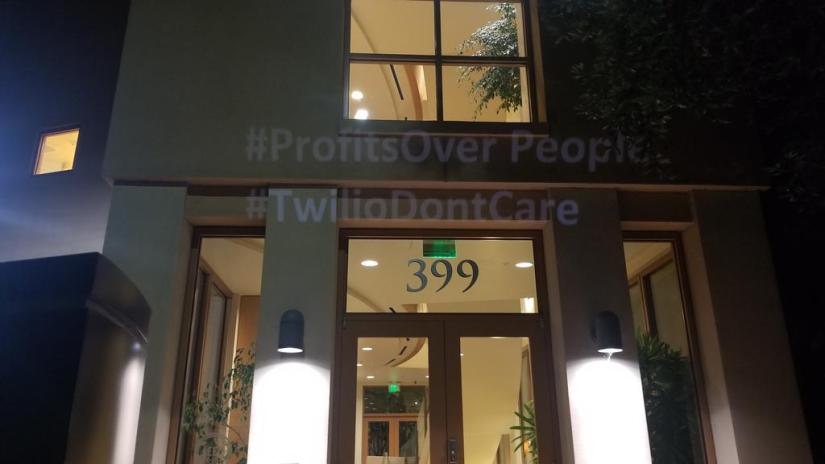
I have made them aware of this by Twitter, Facebook, Instagram, Email (MONTHS AGO), even by sitting vigil at their headquarters with a projector and a ten foot banner. Some of their geeks and support staff came and talked to me and understand the problem. I reached out to every member of their board and their management team. But still do not have any response other than “it violates our acceptable use policy.”

Real lives are on the line here. This isn’t an isolated incident. Hundreds of thousands of these Gotenna devices with Twilio SMS relay are out there in the hands of stupid drunk/drugged kids, in 107F heat, wandering areas of the desert they probably shouldn’t be alone in shock in.  These devices are in the hands of Puerto Ricans and Bermudians and Annapolitans all in the path of severe hurricanes – and when the towers fall again, Gotenna Mesh is (at present) the ONLY device that will enable communications and location sharing.

Twilio needs to find a compromise that allows these survivors to waive warranties (clickwrap license?) and at least TRY to forward their emergency messages to 911 services where they exist.  Gotenna intelligently and selectively sets frequency and power based on GPS location at each use; they should include a subroutine that determines text 911 operability as well.  Gotenna should have a conspicuous disclaimer that although they offer “Emergency” and “SOS” messaging and SMS text relay – that even in areas with operational text 911, that this feature will not work – OR SIMPLY MAKE IT WORK! Cut the red tape, cut the over-regulation, ignore Twilio’s “acceptable use policy” or find another sms/text relay service like e.g. Broadband which ALLOWS 911 emergency relay.  Whatever the solution, it is clearly NOT the status quo…

Twilio may be able to close the blinds and ignore me outside, may be able to block me on social medai… but the mother and father of this girl can’t just close the blinds on their pain.  Closing the blinds won’t help the hundreds of thousands of souls that Twilio and Gotenna could save when the next storms hit.

twilio3322539847_110606349698351_3411187732807202847_n


Uncategorized

Is Gotenna Mesh (GotennaMesh) Right For Your Team Responding to Hurricane Lane?

Oahu

If you are heading to Hawaii for #HurricaneLane, and your volunteers are not ham radio licensed, and your budget does not allow for a $500 Garmin inReach Explorer Plus satellite communicator or $250 for a Spot X satellite messenger (either with $14 a month month-to-month service – no contract required), then you definitely should look into Gotenna Mesh devices, especially if your team will be confined to several miles of each other.  These work particularly well in Seach and Rescue (SAR), convoys, and around base-camp.

Gotenna works about .6 miles (per hop with up to SIX HOPS allowed) under normal non-ideal conditions (i.e. poor placement altitude, obstructions, no relays, high noise floor, and beginner, untrained users…).  If users orient the device in a vertical orientation, place them on the top of their backpack, strategically place a relay device somewhere high, then users are more likely to get several miles of range.  For advanced users, raising a centrally placed relay device atop an antenna, light pole, tree, mountain, or on a drone, up to 62 miles of range may be possible. If operations are constrained to one area, strategic placement of a right-angle reflector or cantenna can double range with some users seeing 5 miles, others (at altitude seeing 29 miles).  For expert users, light surgery to upgrade the internal antenna to an SMA connector shows great gains when coupled with external antennas.

Even more importantly, if ANY user within Gotenna range (within 6 hops) does have cell service or wifi service, then EVERY Gotenna user within range is able to relay one-way text / simple message service (SMS) messages to anyone in the world (even if they don’t have a Gotenna device).  Moreover, if your team has IT support geeks, Mesh Developer Toolkit (only available on iOS) allows for backhaul across the internet, twitter, or custom web-servers.

These features provide a significant advantage for first responders, survivors, and others operating in disaster areas which may not have cell service.  This is a force multiplier. If, for example, a volunteer has Sprint service and a gotenna, but Sprint service is down… but several other team members have GSM phones, like ATT, Tmobile or CDMA Verizon, Sat phone, or someone is near a public wifi that’s working, then EVERYONE in the team can use whichever network is working at the moment – automatically without any user intervention or customization.  *IT IS IMPORTANT TO NOTE THAT THIS IS NOT BIDIRECTIONAL, but being able to get a message out sometimes can be the difference between life and death.*

At only about $70 per Gotenna device, this may prove much cheaper and more immediate than buying ham radios, classes, and licensure for each operator.  Additionally, Gotenna only draws between 100-400milliamps to charge at about 4.74Volts (.4 – 2Watts power draw) meaning that they can charge and stay charged for several days from any source – even a tiny solar keychain device.  Whereas even a BaoFeng ($30 but requires a license) requires at least 12V at 400milliamps (about 5Watts) to charge (with losses in the multiple voltage conversion steps).  Moreover, ham radios require training to use them correctly and avoid misuse or interference with LEO and emergency calls. Whereas Gotenna devices, in contrast, are easily employable with the user’s own phone where they are very comfortable.  Gotennas are very simple devices to use – evinced by the fact that a month after launching the latest software, there’s still no user manual – without public outcry. They simply work.

Before sending your volunteers into harms way, admins should consider outfitting teammembers with Gotenna devices, Sonim XP8 hardened phones, and Next Radio app (with headphones to serve as an antenna) to allow for offline radio alerts even when cell and wifi networks are down.

http://Catsignal.us

Hawaii

Uncategorized

Why Gotenna Mesh off-grid communications devices may be superior in some use-cases to Ham radios (e.g. BaoFeng…) like maybe Burning Man?

Why Gotenna Mesh off-grid communications devices may be superior in some use-cases to Ham radios (e.g. BaoFeng…) like maybe at Burning Man? Top 20ish reasons why Gotenna is better than Ham (or complements it) and some minor suggestions on installation BEFORE deployment:

There was a recent exploit talk regarding the Gotenna Mesh at DefCon 26 Wireless village last weekend, Saturday, August 11, 2018. If your OpSec is important, the talk is definitely worth a diligent listen (below), the updated slides should be reviewed from the author, and update to the latest Gotenna Mesh app would be prudent. I’ve tried to keep my comments accessible to people of all technical backgrounds.

IMHO, it was a good talk, shared many vulnerabilities and cautions… but may be moot in view of new versions in app store. Touch base (download new offline install .apks) quickly if deploying soon.

Gotenna seems to be getting out in front of this issue, but the talk and author seemed a bit biased against Gotenna “toys.” While he makes many solid points for HAM BaoFeng radios as superior to Gotenna Mesh devices, … I’ve respectfully provided some counter-points to consider why Gotenna (or Sonnet Labs Mesh or Contact #CallForCode) may be superior to Ham in some instances, with some users, in some jurisdictions.

Pros of Gotenna Mesh vs. Ham Radio (Top 20ish reasons)

  • price is actually $143 ish for TWO ($70ish each) get the volunteer, first-responder discount or bulk discounts or used ones on ebay
  • not waterproof or playa-proof, but ip66 milspec-ish? Held up pretty well in our real world Hurricane / wildfire tests by DHS DMAT, Puerto Rico Piratas, and CERT units (even Chelsea couldn’t destroy one;) they survive multiple drone drops from tens of feet.
  • +cannot beat it’s simplicity… and familiarity using own phone (android / iOS/ smartwatch). Anyone who can use an iphone can use one. Designed idiot-proof. Simple. It just works.
  • +Gotenna mesh works with waterproof devices that survivors and first responders already have on them (and are likely to take in field, on the run, or in shelter)… iwatch, iphone, samsung, sonim xp8, cat phone… milspec devices with GPS and aGPS and cell sector built in.
  • +does provide FREE SMS text message relay/ remote twitter posts/ twillio / custom web server backhaul digipeter functionality like APRS (Mesh Developer Toolkit and/or GotennaPlus free trial) and scripting. Open source.
  • +ULTRAlow power efficiency and efficacy -=functions at 1 watt versus 5–8 watts Bao Feng for sameish line of sight (LOS) incredibly .6 to 2 to 5 miles, even 62 miles via drone. Physics are a bxtch.
  • +(only draws 100milliamps!) less than a watt…charges with any microusb, solar, or cell charger, can even use your phonecharger or your phone itself (usb-c or otg) to charge gotenna FROM THE PHONE! Can you charge a BaoFeng FROM your phone with a $4 cable? or a shxtty keychain solar cell? Need at least 8watts 12Volts to charge a BaoFeng ham radio compared to 1watt 4.74V for Gotenna Mesh.
  • +6 hop functionality without ANY infrastructure. Your message can bounce off of other nodes up to six times. You can even hoist one or two gotenna permanent relays up in trees or on the roof for crazy range!
  • +e911 text 911 hearing impaired emergency services may be possible in your area* Check local 10 digit backup number for county. 100% Text 911 available in Puerto Rico. Florida is only about 80%. Nevada seems to be covered. Many states have coverage. Best to check before travelling.
  • +does not require FCC licensure, tests, fees, classes like Baofeng / Ham does under FCC rules. ANY idiot can use Gotenna without any classes or tests or fees and there are safeguards baked-in to avoid them interfering with first responders, leos, and others. (e.g. 5 tx limit on user transmissions, ultra low bandwidth, text/gps only, short gps-tagged bursts which frequency hop and spread their spectrum FHSS, CSMA CD collision avoidance type listen-first before transmit politeness and steward of common spectrum.
  • IIRC BaoFeng Hams are technically illegal to the extent they allow FRS GMRS at 5-8 watts?… whereas Gotenna is 100% legal and quiet 1watt polite short bursts (cannot block or overwhelm other signals) in all countries as it dynamically adjusts it’s frequency and broadcast power (and dutycycle, Tx limit) automatically based on gps location, congestion, and local laws.
  • +try throwing your ham radio up a tree, flag pole, on the roof, on a drone up 400ft for better signal? Gotenna is only the size of a lighter. It’s rugged and it has CRAZY range when it’s 400 feet up in the air. Add a tiny $40 ATT iPhone CE with Mesh Developer Toolkit, and you have an entire cellular on wings COW cellular tower gateway digipeter in a box with even a DJI mavic pro. 26 minutes of air time. Tethered drone can stay up indefinitely with hotspot and gotenna. This is VERY useful in off-grid locations.
  • +Ham radios and even BaoFengs are incredibly hard to use even for moderately experienced users. Have you ever tried getting them out of Chinese mode in the sun? shxt screens and shxt keyboards and shxt UI UX userinterference on Baofeng ham… vs Gotenna app UI UX high contrast interface with free offline topo maps and gps on Gotenna Mesh using your own primary device screen (superOLED Note 9 or Sonim XP8 what!? ;)).
  • +Mesh Developer Toolkit FREE opensource enables beacon, status updates, backhaul, auto replies, … scripting, IFTTT, tasker, automate-it SDK integration — your imagination is the only limitation.
  • +Free blueteam friendly tracking with GliderLink built on Gotenna App
  • +Block/Mute malicious / spam / compromised nodes… full smartphone notification granularity by times, location, contact, quiet hours… vibrate/audible… totally customizable.
  • +impossible for new users to accidentally block or jam an emergency channel (SDK limits to 5 tx per minute, tiny tiny messages, FHSS, w CSMACD collision avoidance type polite listening)
  • +GPS /aGPS /triangulation capability for SAR, blueteam coordination
  • +Automated Emergency SOS Beacon with preprogrammed message mode (device itself works even after phone dies or is lost). Any survivor can call for help simply, even if they lose consciousness by five taps on the gotenna button.
  • +Bouncy castle open source encryption* (may be implemented poorly, beware) but the beauty is that you can roll your own homerolled or ANY encryption you like ON TOP of Gotenna’s and some disaster use-cases (Shout, Emergency Shout, SOS, psa) don’t necessarily even require encryption.
  • +Frequency Hop Spread Spectrum FHSS noise resilience even in DefCon wireless village and capture the packet arenas. They even work at the Whitehouse and surrounding areas.
  • +1 to 1 and selective group messaging. send messages to talkgroups, individuals, everything. Simple.
  • +Read Receipt. Ping. Location requests. Automated responses. Automated tracking.
  • +++*While the Defcon exploit speaker talks complete trash about Gotenna OpSec… in the 72 hours of DefCon and even with BlackHat attendees present, 30 thousand of the worlds most 1337 ha><ors (elite hackers, phreakers, rfs, hams and graybeards), NONE of the bountied$ gotenna foxes were caught or compromised, NONE of the flags were captured, communication was not interrupted— cash, pot, and ale (Oxford comma) went unclaimed even though foxes / flags hidden IN wireless village itself “spamming” shouts and clues.

Part 1 of Gotenna glitch / exposure

https://www.youtube.com/watch?v=p9pfwmi1khk&t=110s

Part 2: Continued

https://www.youtube.com/watch?v=Mwd2jZA5Zj4&t=58s

While he rightfully laments the requirements of an onboarded phone with 100 megabyte install and registration… Gotenna has taken a laissez faire approach to their .apk install file being allowed on third party servers (check google) so an admin could download the .apk for sharing with the wolfpack once on site at camp or in field even with no comms (memorystick, usb, wifi hotspot, bluetooth, airdrop, sd card… etc. for sideload) Thankfully, they have also relaxed registration of their app so that it can generate a random GID to avoid sms verification, registration — so you DO NOT need internet or cell service to install and configure gotenna app. Provided you download it before losing internet (or get it from a friend offline).

One such example of a good place for Gotenna is Burning Man’s Black Rock City… especially if the Rangers are getting donated several units.

TLDR; Best practices for deployment in Burning Man, Puerto Rico, California or off grid areas:

+Download the app and register before you go. 90+ megs isn’t easy over 3g.
+Download offline topo maps for the area (another several Mb)
+Plan 30 minutes to update firmware to latest version for Emergency SOS and doubled (6 hop) for each device
+If anyone within 6 hops of you has a signal (wifi, cell, or sat… anything) then ALL #ALLONE of you are able to send uni-directional messages to ANY phone number… even, perhaps text 911? Or your safety contact/ BR rangers. 6 TIMES THE LIKELIHOOD OF GETTING A MESSAGE OUT (signal diversity approach by using any available carrier, any available signal).
+Mesh Toolkit FREE lets you backhaul messages/binaries across the intra / internet
+30 day free GotennaPlus membership does text /sms relay across ANY signal.
+May want to keep Gotenna in the shade, maybe with breeze/ventilation, maybe in a ziplock, maybe superglue around edges for extra playa resistance.
+Any small solar panel will keep this charged all week (interpose a cellcharger if unattended relay atop mast). Use the shadow and point the solar southern at about 15% ish grade. You can ping the device if you know the GID to ensure it’s operational. Three button clicks should take you to relay mode to save power on LEDs and Bluetooth.
+TRY HAM FIRST Rangers and local EMS are on ham radio too (channel 5, 154.600 CTCSS/PL 97.4) to reach the Black Rock City Emergency Services Dispatch.
#SafetyThird
!+SHOUT and EMERGENCY SHOUT and SOS are UNENCRYPTED, public, cleartext promiscuous broadcast. (See Smith v. Maryland SCOTUS) thar be dragons ahead. GPS, metadata, phone number may leak…as expected. Maybe no privacy interest in this data? No warrant, no subpoena, nothing required perhaps? This may present HIPAA and First Amendment issues (see e.g. NAACP vs. Alabama holding by unanimous SCOTUS).
+ONLY direct messages are encrypted… Init error may expose (See youtube DefCon 26 talk) if required, roll your own. Anything you trust. Pre and post encrypt. Use an airgapped and upgraded iPhone imho.

!+Current vulnerabilities allow for impersonation and perhaps defeat of encryption! Beware of Social Engineering and always take anything you receive with a grain of salt. Seek out of band confirmation from trusted friends. Avoid giving away your location.

+Safest NOT TO RELY ON ANY ONE FORM OF COMMS; USE MULTIPLE FORMS OF COMMUNICATIONS!

If anyone has any problems, questions, or needs help, stop by Bronner’s FOAM camp Foam Against The Machine. Sophomoric expert on hand and glad to help. GIDS will be posted (remember impersonation is possible… and FBI bought some of these gotenna units for their academy- Feds have spent millions of public monies on Gotenna and In-Q-Tel IQT was their initial angel investor). #PrivacyCanary

thousand

In my humble opinion, the more appropriate comparison would be between the Gotenna PRO 5 watt Military Spec Hardened MilSpec 68 PRO version with detachable antenna, tunable frequencies, on the one hand, and a Moto/Yaesu/BaoFeng ham radio on the other hand.

As stated on Officer.com:

“Simply put, the goTenna Pro is 40x less expensive, 12x smaller, 10x lighter, and 30x more energy efficient than any other comparable mesh networking tactical radio system. Plus, with its intuitive smartphone integration, operationalization is immediate — no special training is required, as it works just like any other messaging app on your smartphone.

Some of the key enhancements in goTenna Pro relative to the company’s existing consumer product line are:

  • Professional-grade, high-performance mesh networking
  • Upgraded 5-watt variable output power
  • Software-defined tunable VHF/UHF radio (142-175MHz & 445-480MHz)
  • Greatly upgraded radio sensitivity (-124dBm)
  • SMA antenna connector for easy operation with any legacy antennas
  • Military grade ruggedization (MILSPEC & IP68)
  • Intrinsic safety for explosive environments
  • Upgraded battery life exceeding 60 hours per charge
  • Complementary enterprise fleet management portal”
Uncategorized

Mystery Solved: The case of the missing emergency Gotenna Mesh communications network in Puerto Rico

As humans, we have an innate survival instinct.  This instinct compels us to provide for ourselves first, those closest to us, our family, our children, our friends – above all others.  Sometimes though, it’s the survival of the species, nature as a whole, the greater good, the bigger picture that matters.  We found a loophole to mortality in our children. We selflessly provide for our children in hopes that they may have it better than us – that’s how we cheat death, how we overcome hardship.  But what if there’s a better way? What if the stranger across the street were a neighbor? What if the people across the sea on an island in the Caribbean weren’t just strangers you’ve seen on Fox news or CNN. What if they were you? What if they are you? What if we are all on the same team? What if helping your neighbor meant helping yourself? When you play soccer, you don’t need to score the goal to be the winner. By being there, by passing the ball, by shouting encouragement, by getting the ball closer to the goal, you’ve helped. You’ve truly lived.

Einstein said, that “a human being is part of the whole” called by us “universe.”  A person “experiences “[them]self, [their] thoughts and feelings as something separated from the rest.” He described this as a mere “optical illusion” of our consciousness which serves as a “prison, restricting us to our personal desires and to affection for a few persons nearest to us.”  Einstein encouraged us, and provides an eternal reminder, that “our task must be to free ourselves from this prison” by “widening our circle of compassion to embrace ALL living creatures and the whole of nature in its beauty.”

Where did the 300 emergency communication devices meant to help during the next storms in Puerto Rico go?  Where did the donations go? Where did the millions in taxpayer funds to DHS, FEMA, DOD, DOJ go?

In our pursuit of decentralization, of community communications, in our pursuit of throwing off the shackles of a single intertwined monolithic governmental and telecommunications infrastructure that was fundamentally broken and unable to provide help, in the words of the Who, we fearlessly chanted, “we won’t get fooled again!” We threw off the chains and we simply brought in new bosses, chained ourselves to new single points of failure.  All bosses are the same.  A closed source mesh “decentralized” solution and a non-transparent non-profit do as they always do, as they’ve always done- they look out for themselves. They maximize profits, they protect their own.

Where are the emergency communications devices? Are they in the hardest hit parts of Puerto Rico? Are they in the hands of those that need them to effect emergency rescue from the mountains of Utuado? No, don’t be silly or naive. They are at Gotenna corporate warehouses in New York City.  Because they aren’t a disaster or humanitarian company. They weren’t paid enough. Why would they deliver on a promise? Why would they extend themselves to help people halfway around the world of different color, speaking a different language, who don’t have the money to buy Gotenna communications devices?

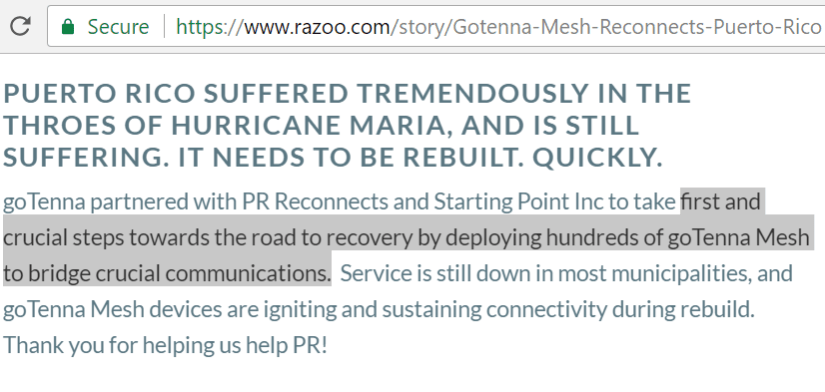
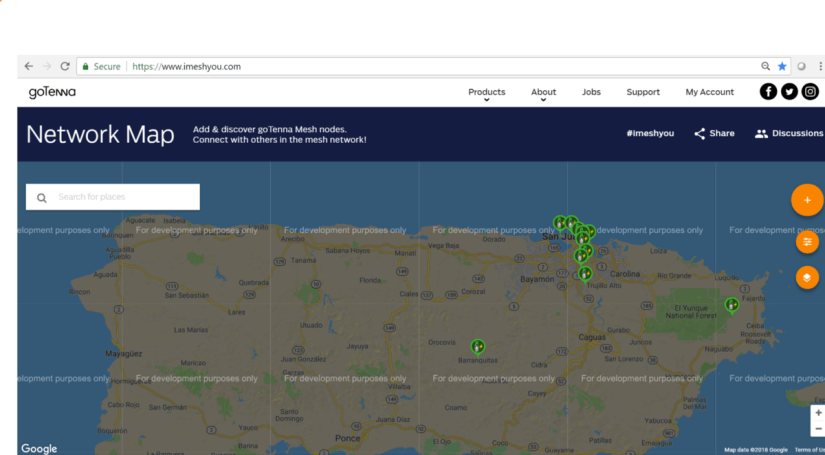
Where are the emergency communications devices? Are they deployed in a “critical communications backbone” for urgent relief and recovery efforts as promised – in the hard to reach areas hardest hit, away from San Juan airport? No, don’t be silly. Don’t be naive. You know humans by now. We look out for ourselves – above all others; so as we’ve always done, they are deployed where the money is, where the affluent are, where the administrators of the fundraiser are – protecting themselves and their families, their business interests, their partners, and friends.  map1

This weekend, we had an IBM Wolfpack sponsored #CallForCode hackathon for 36 hours in Bayamon, Puerto Rico at Engine 4 co-working lab where students, professors, and members of the public selflessly volunteered their time to develop emergency communications solutions for Puerto Rico and the world at large.  Meant to answer the question, when our abuela is in bed in the mountains and the towers fall next time, what will we do?  How can we coordinate first responders with local communities?

It was a beautiful thing. About a 100 hackers, selfless people, volunarios, programmers, organizers shared ideas, wrote code, debugged hardware, employed cutting-edge ai, OPEN mesh networks like LORA with open hardware like raspberry pi.  Gotenna is great and all, but they are closed source; as they repeatedly remind me, they aren’t a disaster or a humanitarian company. Hell, they aren’t even open on the weekends or after 5 – and sometimes the hurricane doesn’t have the courtesy to show up during banker’s hours (M-F 11-4pm).

20180804_171507

So the community built, BORICUA built, they coded, they made their own damned network that no one can control, where the source code is in the public domain, where no patents, or copyrights, or share-holder profits can threaten their resiliency.  I met a man named Javier and his wife, both computer science professors, who taught their children to code, who built an open LOng RAnge (LoRA) Raspberry Pi mesh communications device, called CONTACT, better than some closed-source myopically profit-focused Gotenna. And they did it for $11 versus Gotenna’s $149. The whole family. The children presented the idea at #CallForCode. They shared how they felt lost and disconnected, how there was no way to call for help when the telephone lines, the internet, the wifi, the cellular, when nothing works.  How can we get a message out? How can we connect first responders and the community? How can we use artificial intelligence, to learn, big picture, what the people need? Are they angry? Is there water? How can we get the messages flowing, and use AI to focus our response and triage efforts? I cried. It was beautiful. This family saw the problem first hand. Did they cry about it? Give up? Seek outside help? Hell no, they built the damned thing. They made it work. They effected self-rescue for themselves, for their island, for their neighbors, and when the towers fall in your neighborhood, their devices (or those that borrow their ideas) will be what effects the rescue of your children.  Javier and his wife, may have won both the CallForCode hackathon and the MeshingWithData Hackathon, but we are the real winners.  They’ve selflessly shared their ideas and implementation with the rest of humanity, and perhaps bought us all a fighting chance for next time.

So, where ARE the Gotenna? Who cares. Contact is better, completely open source hardware and software, a tenth the cost, with ai built in, developed by GOOD PEOPLE that are in the business of humanitarian disaster relief and emergency communications.

Ok, but where’s the remainder of the donated $20,000 WHERE ARE THE MILLIONS SPENT BY DHS FEMA DOD on Gotenna?

Maybe they didn’t build a critical backbone of communication to enable the hardest hit regions of the island – spanning from sea to shining sea, over amber waves of platanos, or purple mountainous regions in their majesty.  map1.PNG

Maybe, just maybe, inadvertently, by NOT building a network, Starting Point has given us something better. The vacuum of nothingness has created a hard-felt need, that burning, that fear in your stomach that transcends self or our own myopic views or interests.  Another Javier and his family, in that absence, have stood up, put in the hard work, the tireless hours, and built a network, CONTACT, from the ground up… without millions of dollars or corporate sponsorship, without focusing on share-holder value.  Instead, like Einstein, focused on the good of the WHOLE, with a widened circle of compassion extending to all of nature, all of man and woman-kind, that works and that’s flexible enough to adapt to whatever the geography or contours of all the disasters yet to come.  Perhaps Javier Malave at Connecting Point saw the shortcomings of a closed-source product and closed-source, solely-profit-focused Gotenna, and instead reinvested the donated money into these MeshingWithData hackathons? Perhaps they didn’t build the short-sighted emergency gotenna network, but perhaps they’ve provided us with a better network?